Top Post Views

3: Malaysia REITs - Looking For My 2nd Durian Runtuh
4: Is Insurance Really Necessary?
5: Everyone Must be A Millionaire

Head to the watch list on the above tab to see my what's on my radar and foreseeable future postings =)

Decided to make adjustments on the way I blog & share due to time constraints and other commitments. In the coming weeks you should see them. Short updates but more frequent & concise.
Showing posts with label Genting Malaysia (KLSE). Show all posts

Monday, July 12, 2010

The Question of What Is A Stock?

This became a topic of sharing coincidentally when someone asked me, what is a stock? Does it go up and down, because of certain factors? In reality many people do not have a proper understanding of the stock market. What they really know is just about the price and that piece of news. These people are what we call speculators, people who take financial action (buying or selling) in a manner that has not been given thorough analysis OR have thoughts on their margin of safety (no investment strategy).

Investing in stocks is not the same as gambling! I need to repeat this many times. Certainly there are risks involved in nearly all financial investments that include fixed deposits as well. It differs from gambling because the shareholder has purchased a fraction of a company. Gambling faces the situation of win or lose, you are against the odds. I would also agree that gambling has their own winning strategies but this is a separate topic but just to point out that investing in stocks is not gambling unless you speculate like most people do with little knowledge.

So What Is A Stock or Share?
It represents part ownership of a company, I call it a piece (you) of the big pie (the company). You invest a part of your money into a business and the result is you are a stockholder or shareholder of the company. I will use shareholder from now onwards.

With that, you are entitled to dividends, bonus issues, right issues and be invited to their Annual General Meeting (AGM). Given the total amount of money invested in a business, a share has a certain declared value which is known as par value of a share. This par value of a share was the share price upon initial public offering (when the pie was first presented and distributed for others to grab). Pie presented would mean the company goes public and listed in the stock exchange. This is called Initial Public Offering (IPO).


Referring to the above diagram, Aboi is the major shareholder because I hold 33% of the units, followed by Ahmad. The rest could be considered minor shareholders. You need to know that major shareholders play a BIG role when decisions to be made for the company that requires voting.

Now How Does it Go Up and Down? (Emotionally)
There are two common quotes that are misleading in stock exchange and those are being quoted many times again with little knowledge even by the so called experts and sadly a lot of people accept them immediately at face value.
  • "For every buyer there has to be a seller"
  • "All that is needed is when two traders are willing to trade at the correct price"
It is true that when you buy, somebody may be willing to sell to you. BUT when you are willing to buy, you are only buying a small portion of large blocks of sell orders that have been placed on the market-makers' books long before you took your actions. These sell orders are stock waiting to be distributed at a certain price levels and never lower. Who are these market-maker's? Professional private syndicate traders that work to sell or buy large blocks of stocks.

Say the company is promising, the lower prices at RM1 looks attractive. Not all issued stock can be accumulated by the market-makers, some are tied up like to aboi who is the major shareholder. Hence they look for the floating supply, the remaining 3000 units of the total 30k issued stock. Once there is no more supply, only demand to buy at higher prices will we see share price increase. So now you have the making of a bull run!

Now let's coin that Ahbeng wants to sell all his 3000 units at RM1.2 and Ahlian her 2000 units at RM1.1, these are sell orders and the market price will be supported until these are exercised. Once sold will weaken the market. Any selling has to be absorbed by the market-makers so some of it will be executed immediately while some will go into their books, again accumulating floating supply. If selling happens to be so great that prices fall fast, the market-makers will usually stop the selling by buying so the price will be supported. They will then very sneakily take the chance to sell more stock on the next wave up for short profit taking. This process takes time to slowly complete.

GENM is a good example especially the last selldown, very high sell volume but the price did not went down as hard as the previous selldown. WHY? There are market-makers who are buying to support it and they are buying at extremely large blocks, this is done behind the scenes.

Once these market-makers and other professionals like fund traders have sold all their holdings, we will see what we call a bear run because there is no professional money supporting the high price. This will happen when they think that there is no more demand to "char a.k.a fry" for higher prices. 

If you like to speculate, I call it gamble, this is the game you will be playing against, tough ugh? Now do you see the reason why so many people lose money in the stock exchange, become discourage and then spread news saying that you can't make money there. Stock market is simply a tool where rich people designed it to take money from not-so-rich people. So please learn, think like them and have an investment strategy. It's not just all about price. Think about the volume, the news going around and economic conditions!

So let's recall the earlier two quotes:
  • "For every buyer there has to be a seller" - partially correct but it's never a one buyer one seller scenario. You can be buying a part of the large blocks being ready to be sold at a certain price and vice versa.
  • "All that is needed is when two traders are willing to trade at the correct price" - wrong, the market is not a balancing scale. If so you won't be able to see a bull or a bear run. Prices are real time and they fluctuate based on volume either being executed immediately or still floating around.
Now How Does it Go Up and Down? (Rationally)
Now we look at the fundamental side. The keyword here is called shareholders' equity which represents the amount a company is financed and is defined by the following formula.
  • Shareholders' Equity = Total Assets - Total Liabilities OR
  • Shareholders' Equity = Share Capital + Retained Earnings - Treasury Shares (ignore this for simplification)
  • **Share Price = Shareholders' Equity / Outstanding No. of Shares**
As you can see, the equity comes from two main sources. The first being the original source of money that was invested in the company during IPO plus some additional investments made thereafter. The second comes from retained earnings where the company is able to accumulate wealth over time through its successful operations or ventures. 

The most important factor that affects the value of a company is its earnings (the second source). It is crucial to pick a fundamentally strong company with a sustainable business model. This also brings back to my earlier post in Dutch Lady which mentions that a boring stock (little trade volume activity), can grow in price as long as the company is growing shareholder equity through retained earnings. If the company makes money you are certain to see share price increase, if the company has net losses you are also certain to see a drop in share price.


Bonus and rights exercise also affects the share price. In example, say a bonus of 1:1, this means you are given one share for every one share you own right now. You will say WOW but think again, you have the same pie just that the pieces are now being broken even smaller. Thus, the value is the still same, we call this share price has been diluted by bonus issue. 

Why do companies do this then? Issue bonus shares convert part of the reserves into capital where the company can use for various reasons such as expansion or etc & also to make the share more trade-able to more people because the share price has diluted. Again this can entice people to invest and the company gets more capital funding.


Bonus issues are taken as a sign of the good health of the company and is a part of my criteria of a fundamentally strong company unless there is a good exception. That's because the stock is now more liquid, more shares, easy to buy and sell. By issuing bonus a company is in a position to service its larger equity now. Company is confident of being able to increase its profits and maybe distribute dividends in the future.

Conclusion
Having said so much, of course it is not just earnings that can change the sentiment towards a stock and its price. It is also affected by investors' attitude and expectations of the future value of the company. Many times we see hot stocks go up and down fast, mainly driven by speculators. This is the emotional side of investing and market-makers take such advantage of the conditions. Some times we see less of that in other stocks and they quietly grow in value in the long term.

Someone even told me that in year 2000 tech companies were doing so well but let me tell you that the prices are not justified by their earnings as you can see below. The prices of these hot stocks were fried up so high by speculators and guess who made money? The market-makers. If you were one who did not sell your tech stocks at that time, well too bad you won't be able to see it again not until the next generation assuming history repeats itself.


So the key is to estimate the actual value of the company (I use DCF as you know in my previous posts) instead of looking at the perceived value (share price). This is what I call investing with knowledge. I hope I answered your question of what is a stock :)

Sunday, July 4, 2010

Genting Malaysia UK Acquisition Move [Updated]

Genting Malaysia was one of the top losers during last trading week, slumping as much as 10% in value during intra-day trading. What happened? GENM has proposed to acquire Genting Singapore PLC's operations in Britian (Genting UK) and many viewed the investment as pricey in a risky market. Is it really that bad? Read thestar.biz for analysts comments & come to your own conclusions.
Well for me I think it is too soon to tell, it will most probably take two-three years at least to find out if that investment pays off. Given the tough regulatory environment in the UK; higher gaming duties, smoking ban & removal of some category of games & 2008 financial meltdown, it will take years & many efforts by GENM to improve Genting UK. It is therefore important to keep track of Genting Malaysia's financial performance each year by scrutinizing their annual reports. 

Second, GENM is still in surplus cash even if the acquisition goes through. They would still be in a healthy ~RM3 billion and would still be looking out for other investing opportunities. This is another assurance that I can say which makes GENM still a stable company. 

BUT I do agree that they could have utilize that cash in a better way than to buy a "old man" casino in the UK where competition is strive, it's pretty much a red ocean there. Expansion I believed has to come from Asia where the world's economic growth can be clearly seen shifting from western countries to more modern Asia countries like China, Indonesia & Vietnam.

[Updates] Malaysia Finance comment on GENM's move


GENM share slump is a classic example of people reacting negatively & unnecessarily on bad news which is further amplified by most analysts who says that it is a wrong move. It is not a wrong move, just a bad one. GENM has the cash and is utilizing it for the good of the group and to help their sister company Genting Singapore. Fundamentally Genting Malaysia is still fine, this is why if you are a fundamental investor you need to hold your breath and ride through such volatility which is all very common in the stock market playing field.

There is another type of investor who profits using incremental trading strategy. The caveat? You need time, much more time than being a pure fundamental investor. This means selecting the optimum point in time to make a transcation: either to buy or to sell. The "buy-and-hold" strategy is similar with the exception that you buy when time is bad AND usually this strategy has a longer timeframe (buy at bear market or when it is undervalued).


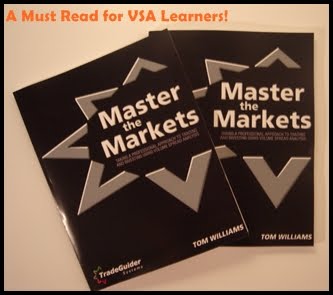
The incremental trading strategy uses fundamental + technical analysis and uses both together as complement one another. Fundamental tells you which companies are sound and worth to invest where else technical would tell you when to invest or divest by looking at volume and price. In other words this form of technical analysis is called volume spread analysis (VSA). VSA is something I look forward to invest my time in the near future. Once you have the basics of fundamental knowledge I reckon that VSA will be the next step in becoming a more successful & adept investor. I will certainly share my thoughts once I feel than I am capable in that area. A very good book to start would be "Master the Markets" By Tom Williams. You can download it here.


Wednesday, June 9, 2010

Trading/Services: Genting Malaysia Berhad


Introduction 
Genting Resort was the brainchild of the late Tan Sri Dato Seri (Dr.) Lim Goh Tong, spent all he had in his life without earning an income to develop and expand Genting Highlands without any help from the government until it was completed and opened on 8 May 1971. Now, it is one of the most successful Casino resorts in the world and a primary tourist attraction for Malaysia.

Genting is now a group and has diversified into many other industries such as plantations, property, paper, power generation, oil and gas exploration and cruise boat industries. Distinctive names namely Asiatic, Genting Sanyen and Star Cruises are part of Genting Group. Now Genting is being managed by his son, Tan Sri Lim Kok Thay.

Genting Resorts acquired the entire gaming, hotel and resort-related operations from Genting Malaysia in a restructuring exercise in 1989.  Known as Resorts World Genting now, the resort offers six hotel with 10k rooms, over 50 fun rides, 170 dining and shopping outlets, mega shows, business convention facilities and endless entertainment - all under one roof. Resorts also owns and operates two beautiful seaside properties named Awana Kijal Golf, Beach & Spa Resort in Terengganu and Awana Porto Malai in Langkawi.Is Asia's leading leisure & hospitality company with a market capitalisation of RM17 billion.


Fundamental
1. Does the company have an identifiable durable competitive advantage?
It operates using a traditional business model where game is emphasized and little attention is paid to the environment, this means cramped and smoky casinos. The model has suited regular patrons all these years (72% of the visitors are day-trippers, 28% are hotel guests from AR 2009). This suggest that the resort is catering to gamblers. The younger crowd now have different taste & demands such as fine dining & Western culture. This is something to think about.

2. Do you understand how the product/service works?
Gamblers will emerge whenever there are dice and playing cards. Greed is part of human and will be part of our lives. Casino (Cash In Now) serves usually three distinct markets which are premium a.k.a high rollers, mid market and general gaming. For the super-rich, not-so-rich folks and for folks who just want to have fun (theme parks, entertainment, shopping and MICE). MICE stands for Meetings, Incentives, Conventions, Exhibitions & Events. To name a few, companies like Prudential and MAA have been using Resorts.

3. What is the chance that it will become obsolete (KO) in the next twenty years?
Zero for obsolete. More competitive would be more suited for the next twenty years which is certain. I was also quite shocked to know that there are 60 casinos of different sizes just 3.5 hours away from Kuala Lumpur & 17 more alone in South Korea. This number is still growing as we all know that Asia is a sweet spot for economic growth for emerging economies like Vietnam, China, India and recently Indonesia is coming back. The last three countries has sizable population to take note.

4. Does the company allocate capital exclusively in the realm of its expertise?
Yes, Genting Resorts only spends its capex on leisure and hospitality business but has diversified beyond the borders of Genting Highlands, for example Star Cruises Limited and the Awani Resorts in Terengganu and Langkawi.

5. What is the company's financial history and status?

  • Why a big dip in 2000 (1999 finances)? Due to goodwill written off from subscription of Star Cruises shares of RM1bil. Goodwill means buying a stake of another company at more than fair value or book value.
  • Net Profit Margin is averagely in the 30% figure. Another good factor of Genting is that they have consistent high occupancy rates of 77% to 90% from 2003 to 2009 which means they are truly maximizing their assets for profit!
  • Return of Equity which means how much shareholders get in return of investment is in the 20% range over the last 10 years.
  • Revenue Growth Rate has been bumpy. Attributable to Visit Malaysia in 2007, disposal & impairment losses of Star Cruises and etc. Nevermind that, to simplify I'm looking at growth rate over 10 years of 6.88% and over the last 5 years is 12.28% which shows improving performance. This kind of growth rate value is also known as CAGR - compounded annual growth rate.

  • Earnings Per Share & Dividend Per Share is on the rising trend over the past 10 years. GENM's dividend payout policy has been in between 20% to 30% per share earnings. Talk about being conservative, where else do they use their money then? Read on.
6. Is the company conservatively financed?
Balance sheet is VERY IMPRESSIVE. No debts and coffers filled with ~RM5bil of which RM3bil in bank balances and RM2bil in money markets (2009).


7. Is the company actively buying back its shares?

Yes, initiated since July 2007 and to date total treasury shares (shares bought back) stands at 208 million units. Resorts has been paying RM710mil for buy backs for the last three years even at times of financial crisis because they have tremendously strong cash balance in hand.

8. Is the company free to raise prices with inflation?

I did not find any info. Thus I took the liberty of using visitor growth rate vs revenue growth rate over the last 5 years. CAGR of visitors at 5% where else CAGR of revenue is ~13% tells us that revenue actually grows faster than the number of visitors. RWG serves the Malaysian market which is 85% of their total visitors & people are willing to spend more every year so cost (with per year our national inflation) does not seem to pose any problem with spending.

9. Are large capital expenditures required to update plant and equipment?
No, Resorts is modeled on a traditional business and does not spend a lot of capex to build nicer hotels and facilities. There is no new room capacity envisaged following their most recent sharing in Investors Forum in September 2009.

Discounted Cash Flow Analysis
DCF treats a company as a business rather than just a ticker symbol and a stock price which most blind people think that price only matters. It requires you to think through all the factors that will affect the company's performance and gives you an appreciation for what drives stock values. Go to Investopedia.com and learn.

I have estimated that GENM's revenue growth rate is at 8% averagely, with 65% operating cost margin, 25% corporate tax, 2% re-investment but a growing working capital in tandem with revenue growth at 8% for the next 5 years. Having computed all these in my opinion it is fair to buy..

GENM at RM2.20 to RM2.65 for ~15-13% discount rate.

You would probably ask why the start of the drop in 1999 and the rise and fall in 2007-2008. Asian Financial Crisis in 1999 and the peak of the bull run at the end of 2007 before some profit taking takes place by smart investors and then the great collapse as we all know it. This is exactly why an intelligent investor must seek buying opportunities during a collapse (bear run) OR to buy at a discount rate from the fair value to ensure you don't overpay for it.

At RM1.30 in between 2001 to 2002 (because nobody would know what's the lowest price you can buy), the stock would have appreciated to RM2.80 in 2010 which equates to 9% returns per annum, not accounting dividend reinvestment which would give you more than a 10% figure. This assumes that you hold the stock through the 2009 financial crisis. Why would you sell anyway? Do you think a stable and rich cash company like Genting will ever see its share price drop to less than RM1 (because Genting Groups has a 50% stake in Resorts)?


What Do I Think? 
The Pros
Damn rich company. Share buy back programme (helps in increasing share price). The only licensed casino operator in Malaysia. RWS won't bite Genting Malaysia as it serves a different market. Still looking for opportunities abroad to diversify income stream because too rich ma.

The Cons
Competition is stiffing up. Gaming landscape is changing so the question is, will younger people still be interested in traditional casinos?


Last say, I would be standing on the sidelines for now seeing that GENM is quite an active stock during trading, a great buying opportunity will come when the market is actually down. The price it is at right now is fairly valued (anything above RM3.20 is overvalued) but it is still better to buy at a certain discount rate at least in the 10% range as risk compensation.

GENM is a good stock but not exactly a great one. Why? My portfolio aims for at least 15% returns per annum and GENM is not really suiting me lately. I could one day diversify and put some allocation into this stable & entrenched gaming company. I'm still young ma so find more risk lor if there is any, what I call an educated risk.